“Now your entire workflow is a risk area, and that significantly expands the surface of risk.”
This observation from Edward Yee, Growth and Strategy Lead at FAR.AI, set the tone for an evening that challenged how we think about trustworthy AI generated code and software.
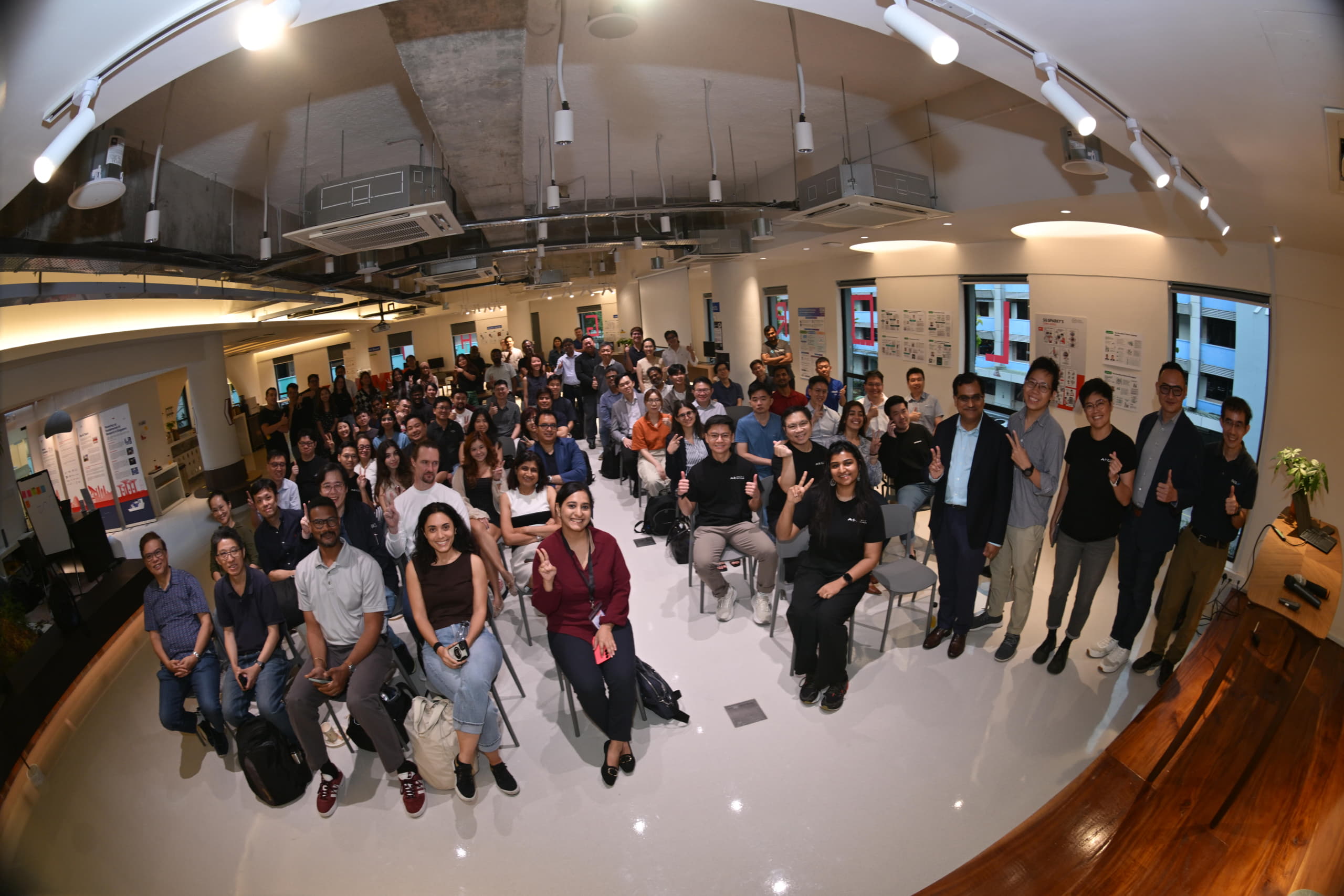
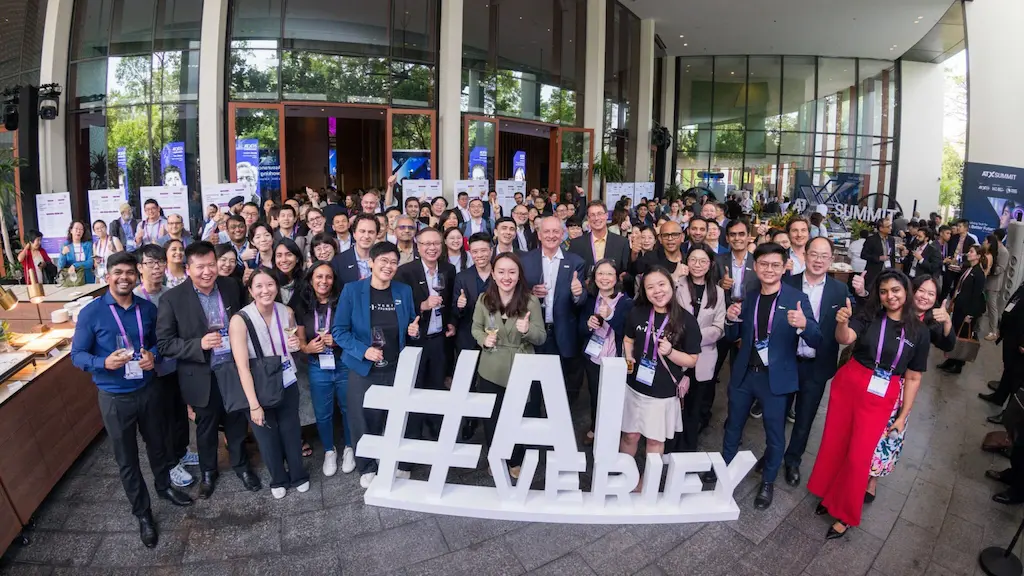
On 14 March 2026, over 80 members of the AI testing and assurance community gathered at Lorong AI @ one-north to explore a critical question: what does AI-generated code look like in practice—from development to deployment and governance?
From Code Generation to Trust Engineering
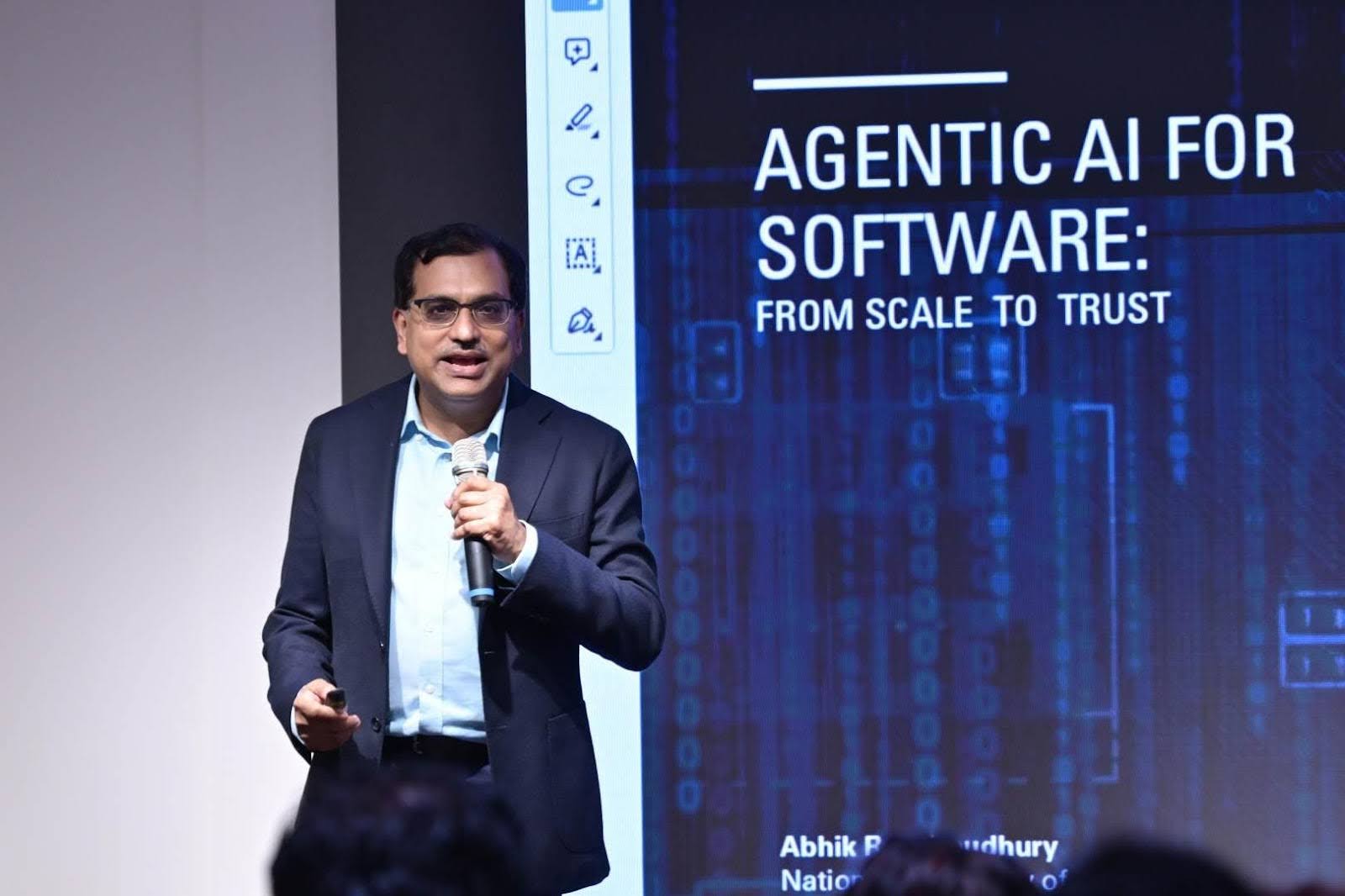
Professor Abhik Roychoudhury reframed the discussion: the real challenge is no longer about scaling programming but trusted automatic programming. Verification which was once an afterthought, is now critical.
The goal: trust by design, with verifiability and interpretability built in.
The industry must move from high capability, low assurance to high capability, high trust systems.
When the Workflow Becomes the Risk
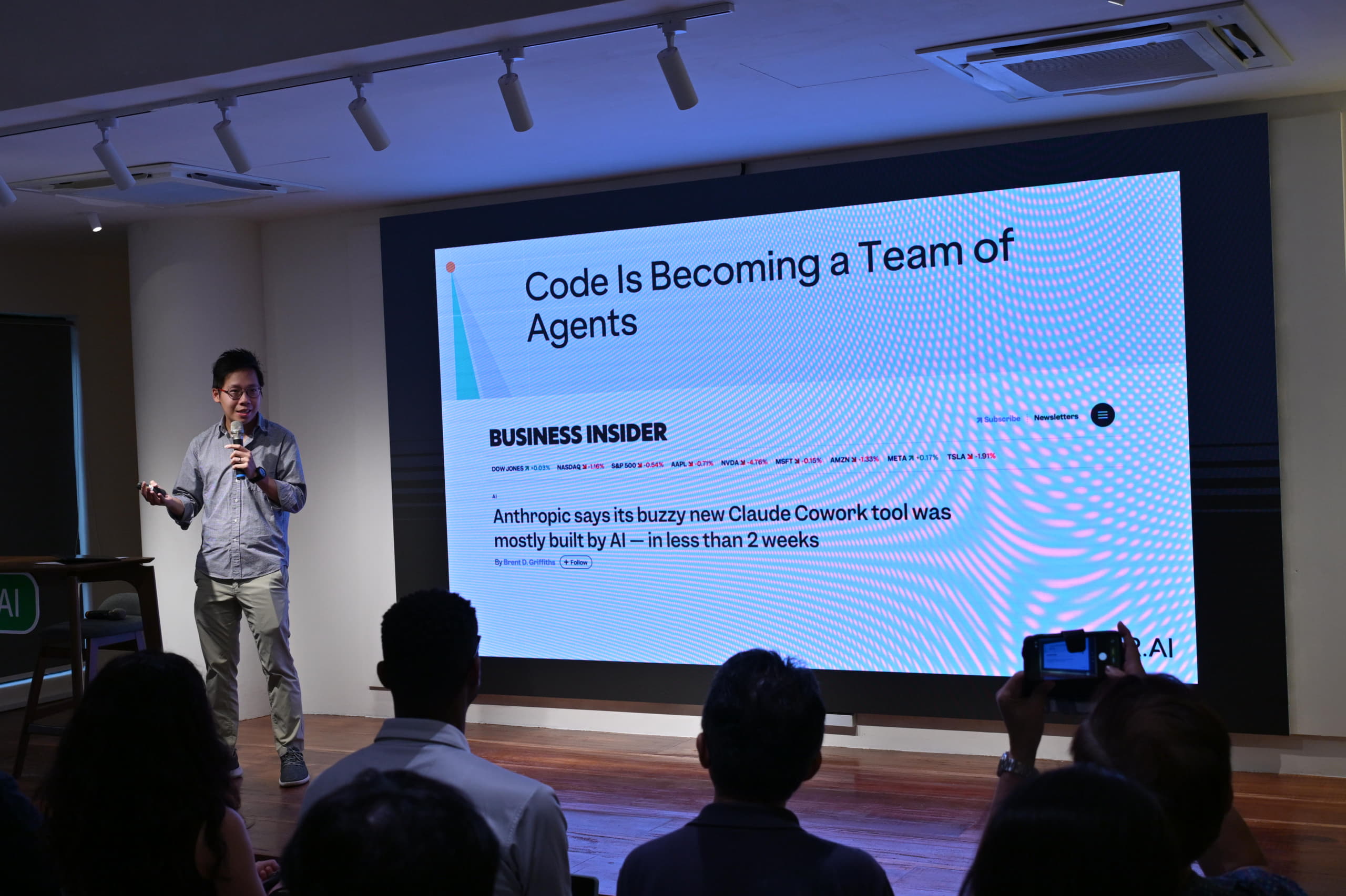
Edward’s demo made one thing clear: in AI-driven systems, the entire workflow is the attack surface.
With multiple agents interacting, a single prompt injection can cause one agent to hijack another agent and cause it to act as a bad actor.
This shifts how we think about risk. It’s no longer about securing individual components but securing interactions across the system.
Future of AI generated code – starts today!
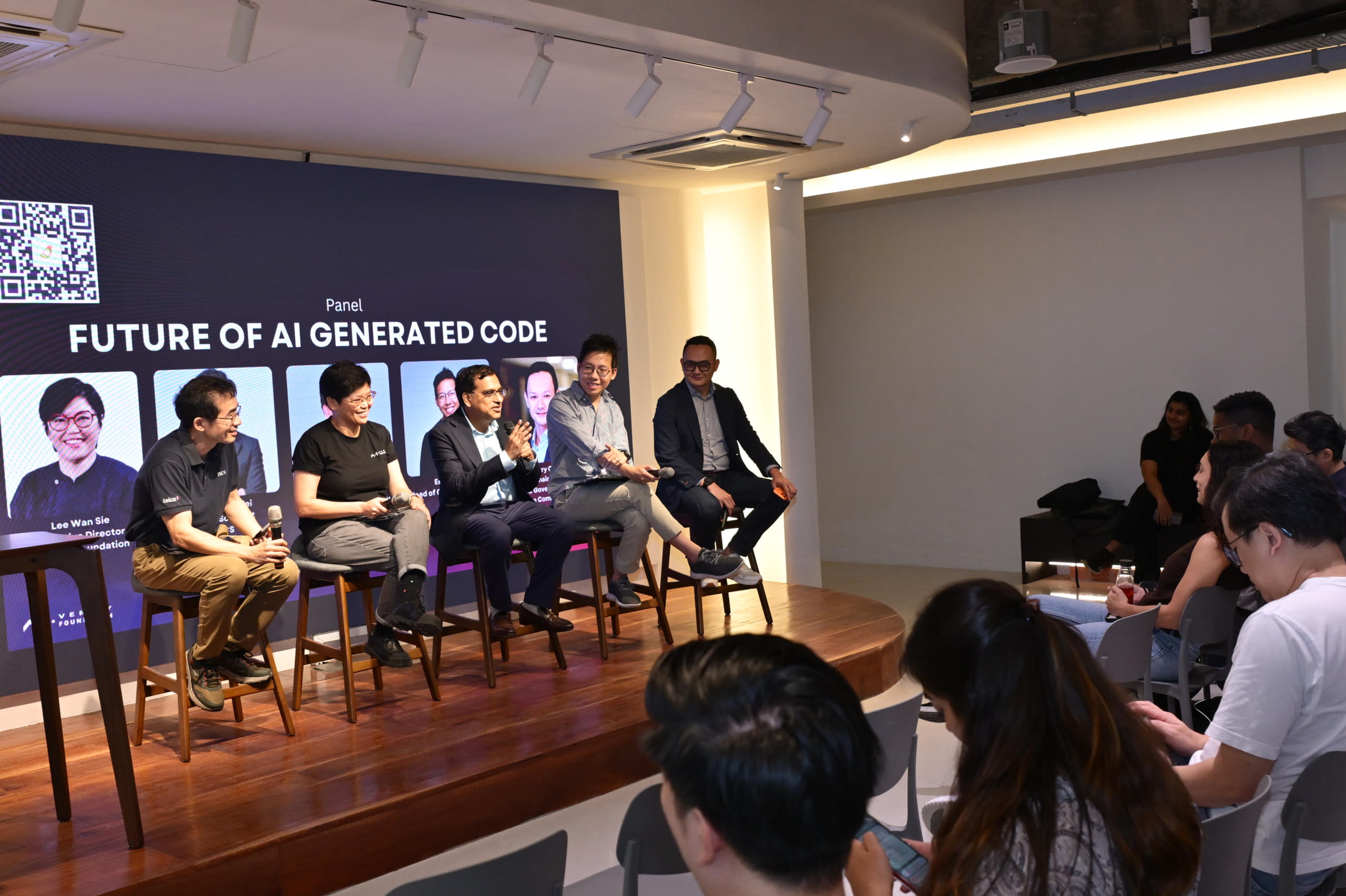
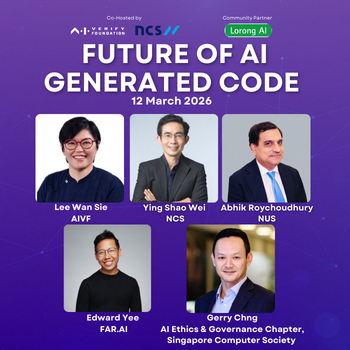
Lee Wan Sie (Executive Director, AI Verify Foundation), Abhik Roychoudhury (Provost Chair Professor, NUS), Edward Yee (Head of Growth & Strategy, FAR.AI), and Gerry Chng (Chairman, AI Ethics and Governance chapter, Singapore Computer Society) joined us during the panel and they were moderated by Ying Shao Wei (Chief Scientist, NCS).
Our panel discussed critical questions for the industry:
- How do governance models evolve when software is built by AI pipelines, not humans?
- Does speed create advantage—or systemic fragility?
- Where does accountability sit when AI-generated code fails?
- How do we validate not just code, but interacting agent behaviour?
- What will responsible AI software development look like in five years?
Looking Forward
As capability accelerates, the real differentiator won’t be speed, but trust.
Because the question is no longer can we build faster? It’s “can we trust what we build?”
Co-hosting Community Events with Our Foundation Members
This community event marks the first time AIVF has co-hosted a meet-up with one of our Foundation Members, NCS. This initiative brings industry practitioners to the forefront, enabling them to shape the conversation and lead dialogue on the most pressing and pertinent challenges faced by their industry.