Real applications. Real testing. Real trust. Real impact.
As AI systems become more capable and autonomous, the question is no longer whether AI will shape industries and societies but whether people can trust it to do so safely and reliably. At International Scientific Exchange on AI Safety and ATxSummit 2026 week, Singapore took another step towards answering that challenge together with our assurance and testing community.
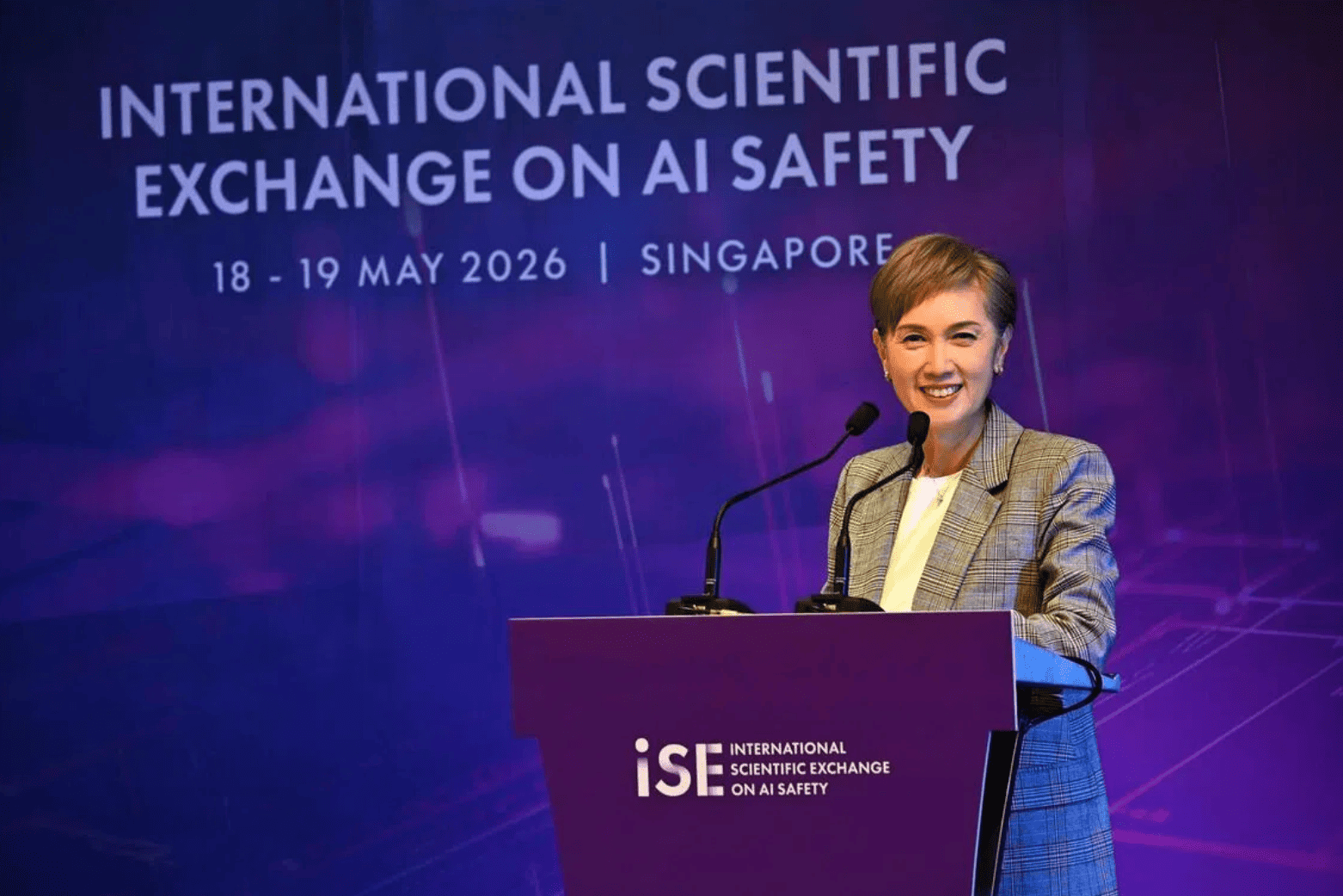
On 18 May 2026, Minister for Digital Development and Information, Josephine Teo announced the AI Tester Accreditation Programme (AI TAP), the first initiative of its kind in Asia to recognise competent third-party AI testing providers and codify what good AI testing looks like.
AI TAP aims to strengthen confidence in AI systems by supporting credible, independent testing. Industry interest has already emerged from organisations including AIDX, Asenion, Knovel Engineering, PwC, Resaro, and Vulcan.
AI TAP will:
- recognise competent AI testers with proven technical capabilities;
- help AI deployers access credible, high-quality testing services;
- strengthen confidence in AI systems across the ecosystem.
Building assured credibility together
Watch the highlight reel of AI Assurance Exchange at ATxSummit 2026
At ATxSummit 2026, our Executive Director Lee Wan Sie highlighted in her TechTalk that trustworthy AI is built through rigorous testing, independent validation, and credible assurance.
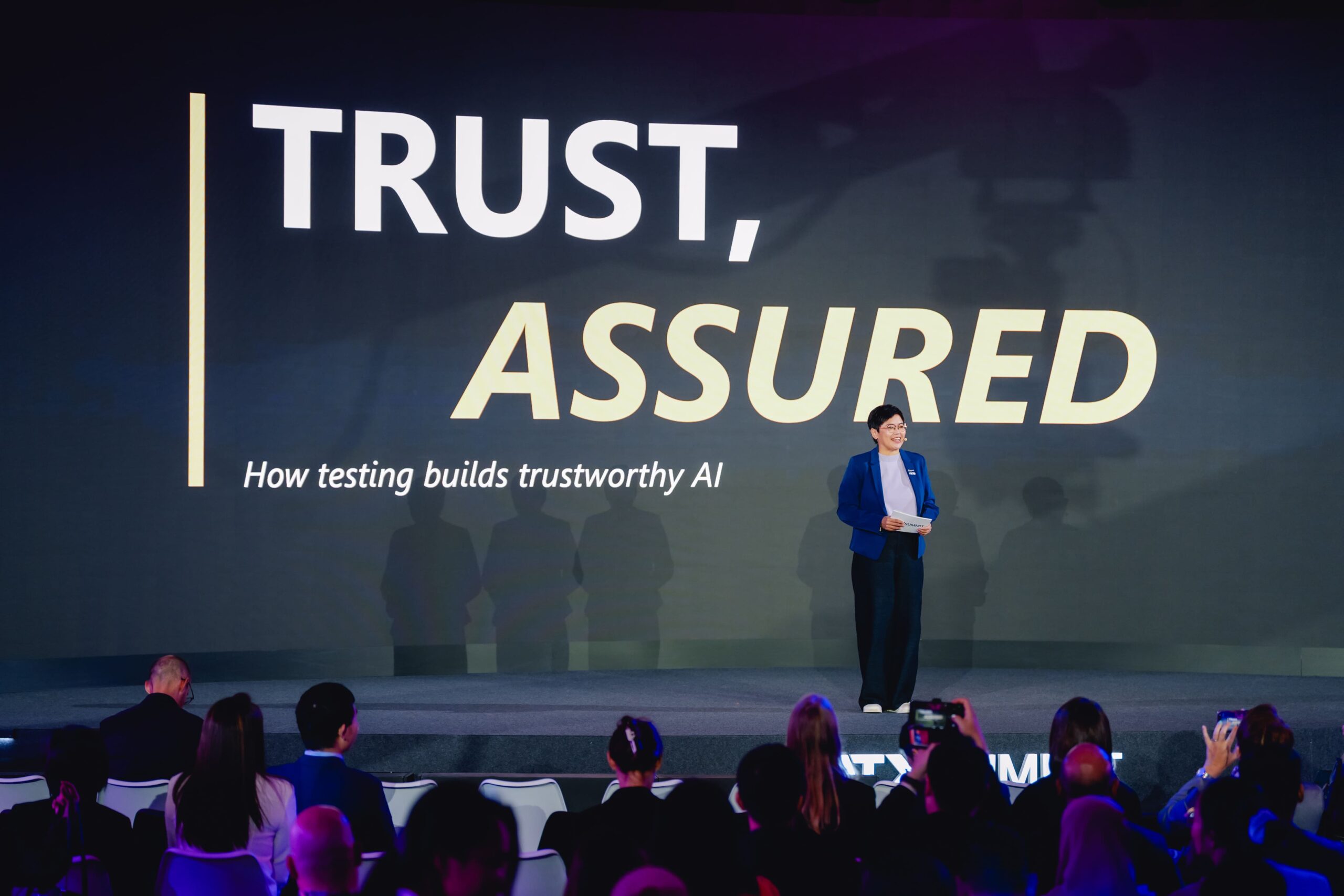
She shared how the Global AI Assurance Sandbox is helping to advance this vision by facilitating the technical testing of real-world Generative and Agentic AI applications by independent testers, guided by Singapore’s governance frameworks, including AI Verify testing framework and the Starter Kit for testing LLM-based applications. To date, the Sandbox has supported the testing of 30 applications from 14 sectors across 12 geographies.
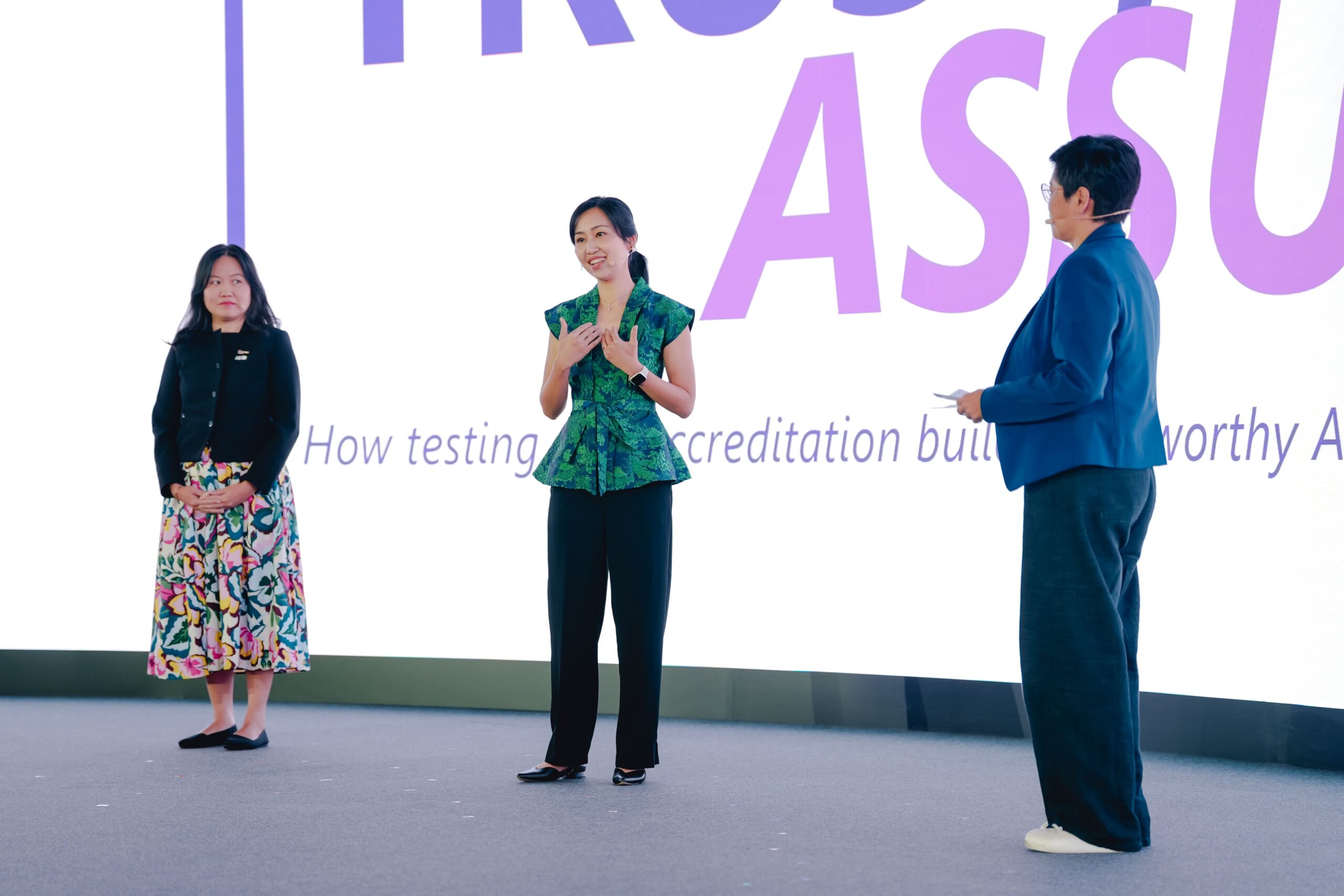
Pre-qualified Sandbox testers also joined Wan Sie on stage to expand on why credible testing matters now more than ever.
Fion Lee-Madan (Asenion) shared how Accreditation acts as the last mile for AI testing companies, “we can prove that we are competent, there is independence, there is a consistent process and technique we follow.”
April Chin (Resaro) also echoed this sentiment, “Accreditation brings independent body of evidence to help us know how the AI product was built and how it will perform in the real world. It also helps to establish the common vocabulary and definition of what a trustworthy product is.”
AI is a learning system and as such, assurance for AI needs to be a continuous living system too.
Showcasing insights from the latest 13 case studies in the Sandbox
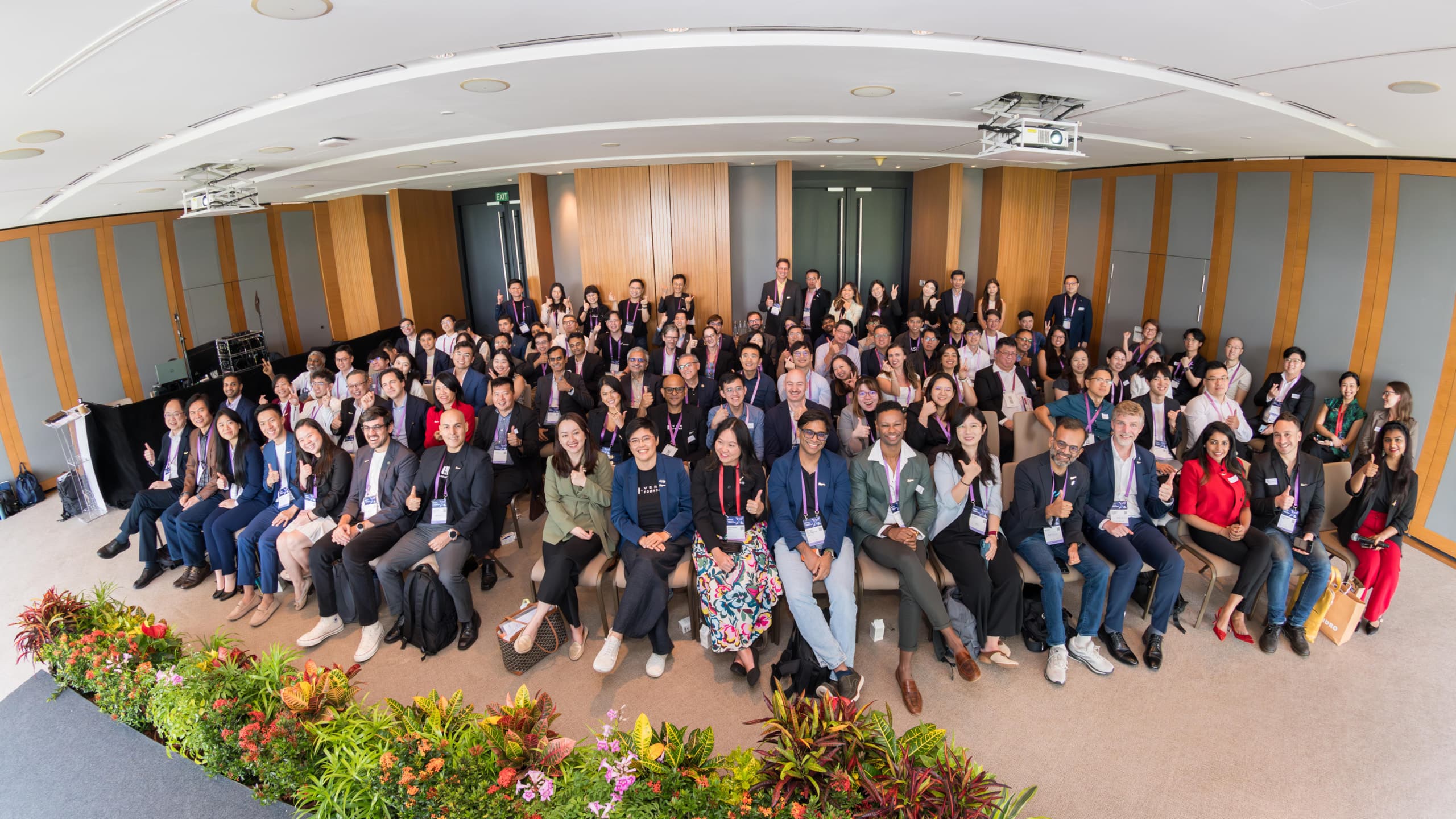
The Global AI Assurance Sandbox sharing session brought together the latest cohort of 13 pairs of AI deployer and testing firm pairs. More than 80 industry practitioners from around the world joined the discussion, exchanging perspectives on the evolving practice of AI assurance and the role of testing in building confidence and trust in AI systems.
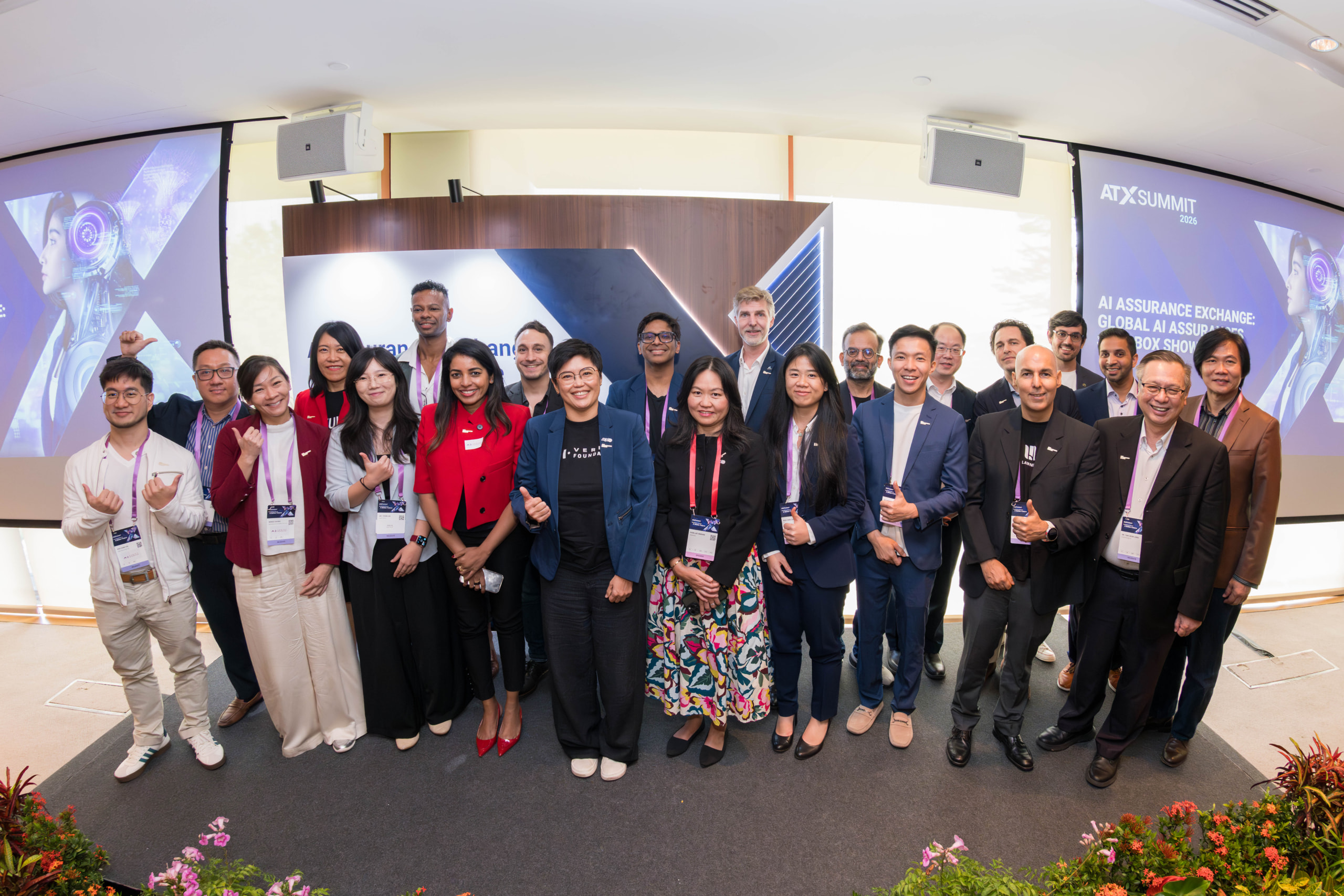
Featured sharing included:
- impress.ai and Asenion tested SAVOS, the Agentic AI Hiring Ally that re-imagines the hiring process for the AI-enabled workforce
- Jobstreet by SEEK and AIDX tested for LLM job matching fit signal
- NCS Group and AIQURIS tested a GenAI supported conversational assistant for career guidance
- Singapore Academy of Law and Resaro tested a single-turn Question & Answer (Q&A) application designed to retrieve relevant cases and legislation to answer legal research questions
- Earlybird AI and Knovel Engineering tested AI-native accounting app that also leverages autonomous AI agents in its workflows
- Changi General Hospital and Guardrails AI tested a clinical guidance chatbot for junior residents to query SingHealth guidelines on diagnosis, treatment protocols, and medication dosing
- Nanyang Technological University Singapore Lee Kong Chian School of Medicine and Knovel Engineering tested a voicebot that trains students in empathy, information gathering, and patient prioritisation
- MangaChat and AIDX tested a conversational chatbot that supports children and youths in Singapore in the areas of emotional awareness, emotional expression, and early emotional support
- Fourtitude.asia and Dynamo AI tested a RAG multilingual customer support chatbot
- Kasikorn Business Technology Group [KBTG] and Vulcan tested an internal chatbot across Thai, English, code-switched Thai-English, and Romanised Thai interactions
- Vulcan tested a retail customer service chatbot designed to answer customer queries by retrieving information exclusively from pre-approved company FAQs to provide reliable, brand-aligned responses
- City Developments Limited and Knovel Engineering tested an internal chatbot for management to query trends and insights
- ST Engineering and AIDX tested AGILTrust, including evaluation approaches for emotionally responsive AI features
These projects demonstrate the growing diversity of AI testing and assurance use cases, spanning recruitment, healthcare, education, legal services, finance, customer service, and enterprise productivity.
Read the case studies from the Sandbox here to learn more about the testing approaches, findings, and lessons from these real-world deployments.
Convening the assurance and testing ecosystem together
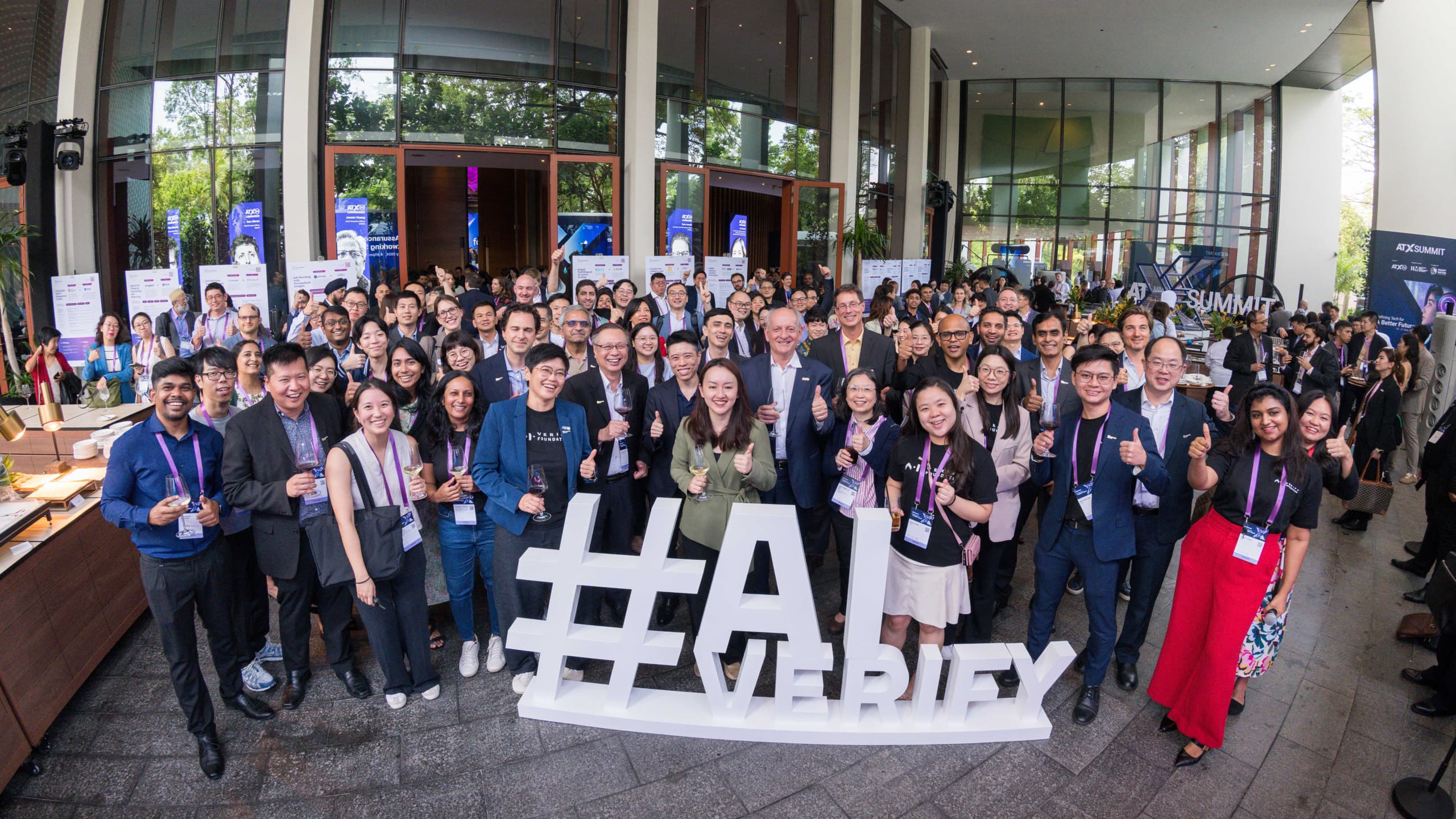
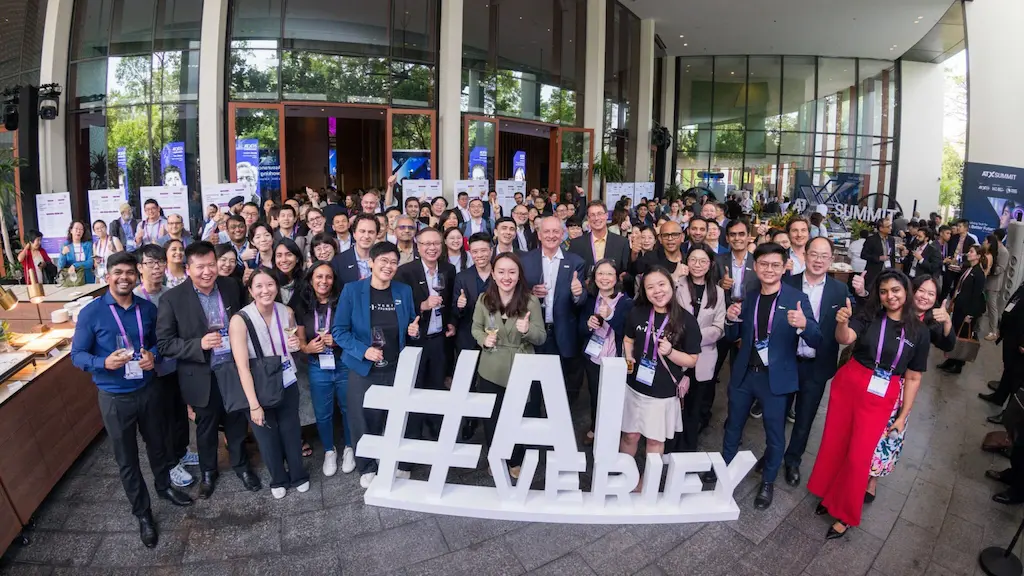
The sessions concluded with the networking reception at Capella Singapore, bringing together more than 200 global assurance leaders, practitioners, industry players, and policymakers.


We were also pleased to welcome Ng Cher Pong (Chief Executive Officer, IMDA), who joined the reception and connected with members of the AI Verify Foundation community. The gathering provided an opportunity for participants to exchange perspectives, forge new partnerships, and continue advancing the development of a trusted and vibrant AI assurance ecosystem.
AI Assurance is not built in isolation
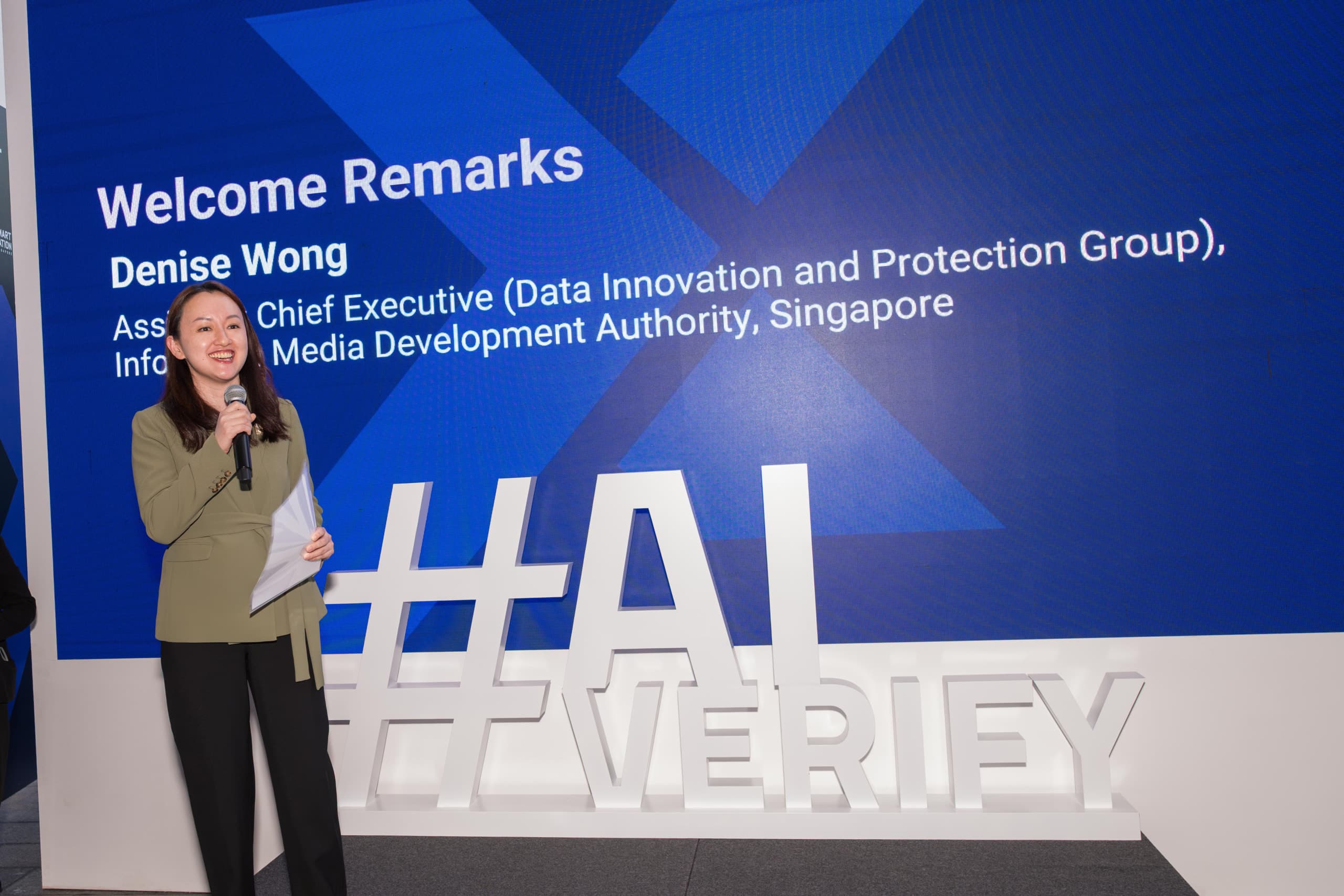
As shared by Denise Wong (Assistant Chief Executive, Data Innovation and Protection Group, IMDA), trusted AI assurance cannot be built in isolation; it requires collaboration across deployers, testers, industry, researchers, and policymakers to turn testing insights into practical standards for real-world AI systems.
From testing to accreditation to ecosystem building, Singapore has a unique opportunity to continue building a trusted AI assurance ecosystem.
And we are all building it together!
Announcements made during ISE and ATxSummit 2026:
- AI Tester Accreditation Programme – read press release here
- Update to Model AI Governance Framework for Agentic AI. The framework has been updated to include real world case studies from companies like PwC, Workday and Tencent and new best practices.
- Case Study: Responsible Deployment of Openclaw – Applying Singapore’s Model AI Governance Framework for Agentic AI
- Discussion Paper on Legal Responsibility for AI Agents – Issues raised by a legal working group on how existing legal frameworks relate to liability for AI agents